
Pet Connection by Dr. Marty Becker, Kim Campbell Thornton and Mikkel Becker
Type: Text Feature
Frequency: 1x Weekly
Categories: .
Available for print / Web / mobile
A breed apart! Pet Connection provides pet owners with the information they need and the stories they love. Award-winning journalist Kim Campbell Thornton knows the key questions facing pet owners and where to find the answers, as well as providing a wide range of human-interest stories about life with pets.

You might also like
 7-Day Menu Planner
 El Acertijo de Sherlock Holmes
 Adam@Home
 Lalo Alcaraz
Kim Campbell Thornton
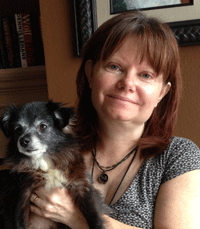
Kim Campbell Thornton has been connecting with pet owners since 1985, when she was hired as an editorial assistant at Dog Fancy and Cat Fancy magazines. She rapidly rose up the ranks, becoming editor of Dog Fancy in 1988, a position she held until 1996. That was the year she wrote the book “Your Aging Cat”—her first of more than 20 books—and decided to make writing her full-time career. Other books include “Why Do Dogs Do That?” “Why Do Cats Do That?” and “The Everything Dog Health Book,” co-authored with veterinarian Debra Eldredge.
Thornton was named the 2006 recipient of the Winn Feline Foundation Media Appreciation Award. Dr. Susan Little, Winn's president at the time, said, "Kim's writing has been an important educational tool for helping the pet-owning public understand the health and welfare of cats."
Thornton’s articles appear in many pet and veterinary publications. She has also written frequently for MSNBC.com and many pet-related websites, including Vetstreet, Dogtime, Cattime, Catster and Dogster. In recent articles, Thornton has discussed the important roles that genetic discoveries are playing in veterinary medicine, ways to curb pet obesity, and the rituals and memorials that can help people say goodbye to a beloved pet. Her work has earned multiple awards.
Thornton has written or contributed to a number of books about cats and dogs, including the 2010 "Careers With Dogs," and Dr. Marty Becker’s "Your Dog: The Owner’s Manual" and "Your Cat: The Owner’s Manual." Thornton has also served as president and vice president of the Cat Writers Association as well as on the board of the Dog Writers' Association of America.
An avid traveler, Thornton has expanded her writing to include coverage of the big cats and wild dogs she has been fortunate to encounter on trips to Africa and Brazil. At home, she enjoys training her Cavalier King Charles Spaniel and her Chihuahua mix in nose work and taking them for long walks in Laguna Beach or on road trips to Seattle, Santa Fe, N.M., and the Bay Area.
The Lake Forest, Calif., resident has raised money for research into mitral valve disease and fostered dogs for Cavalier rescue, including her current foster, Kibo, who is quickly winning her heart. She also shares her home with a 26-year-old African ringneck parakeet, Larry Bird, whose verbal talents include a highly realistic meow.
Dr. Marty Becker
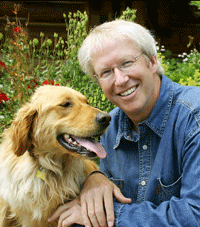
Dr. Marty Becker, “America’s Veterinarian,” has spent his life working toward better health for pets and the people who love them.
Dr. Becker was the resident veterinary contributor on "Good Morning America" for 17 years. He is currently a member of the Board of Directors of the American Humane Association as well as its Chief Veterinary Correspondent, a founding member of Core Team Oz for "The Dr. Oz Show," and a member of the Dr. Oz Medical Advisory Panel.
He has written 22 books that have sold more than 7 million copies, including three New York Times best-sellers -- one of which is the fastest-selling pet book of all time, "Chicken Soup for the Pet-Lovers Soul." He has been a contributor to Parade magazine, Reader’s Digest and AARP.com. Animal Radio hosts him monthly as their Chief Veterinary Correspondent.
Dr. Becker is an adjunct professor at his alma mater, the Washington State University College of Veterinary Medicine, and also at the Colleges of Veterinary Medicine at both Colorado State University and the University of Missouri. Additionally, he has lectured at every veterinary school in the United States.
A passionate advocate for the human-animal bond, Dr. Becker serves as an adjunct professor at the Research Center for Human-Animal Interaction at the University of Missouri's College of Veterinary Medicine. He is an honorary board member of Pet Partners and the Humane Society of New York, as well as a past board member and strong supporter of his local pet rescue group, Second Chance Animal Adoption of Bonner Ferry, ID, as well as a supporter of the Panhandle Animal Shelter in Sandpoint, ID, the Kootenai Humane Society in Coeur d'Alene, ID, and the Whitman County Humane Society in Pullman, WA.
Dr. Becker also serves as the Chief Veterinary Correspondent for the American Humane Association, with a strong focus on supporting their efforts to end the use of gas chambers in animal shelters, a cause for which he has successfully advocated since his earliest days as a veterinarian. His special fondness for older pets has led him to a spot on the Advisory Board of The Grey Muzzle Organization, which is dedicated to helping homeless senior dogs. He also serves on the Advisory Board of World Vets, which brings veterinary care to pets in need all over the globe.
He practices at Lakewood Animal Hospital and North Idaho Animal Hospital in north Idaho because he loves veterinary medicine, pets and the people who care for them.
Mikkel Becker
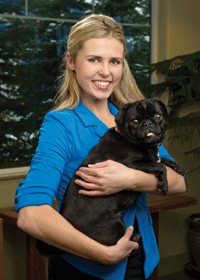
Mikkel Becker is the featured animal trainer on Vetstreet.com, which tallies more than 2.5 million unique visitors per month. Becker has a degree in communications from Washington State University with a minor in sociology. A certified professional dog trainer through the Association of Pet Dog Trainers, Mikkel graduated with honors from the San Francisco SPCA Dog Training Academy with Jean Donaldson. Mikkel is also a graduate of the Karen Pryor Clicker Training, along with the Purdue Dogs and Cats course with Dr. Andrew Luescher. Mikkel also studied at Tufts Cummings School of Veterinary Medicine in the school's Animal Behavior Clinic under Dr. Nicolas Dodman. Becker has trained exotic animals, specializing in primate care and training with a focus in orangutans, at Jungle Island in Miami.
Becker does frequent media interactions with various publications, including Parade Magazine, Woman's Day, Scholastic, Parent and Child, Dog Fancy, Cat Fancy, Knight Ridder Newspapers, House and Home and more. She also makes frequent appearances for radio and TV, including KOMO Seattle, KXLY Spokane, "The Allan Handelman Show," Animal Radio, Pet Life Radio and various other pet-related segments. She has co-authored six pet books.
Closer to home, Mikkel is an animal trainer conducting group classes (puppy to adult dog) and individual training (from basic manners to deeper-rooted behavior problems, such as aggression or fear, working in conjunction with a veterinarian). She also trains cats and works with numerous behavior challenges within the home or veterinary hospital. Becker speaks at numerous pet conferences, specializing in the topics of anxiety and fear and creating a more confident canine or cat. Mikkel is the director of the training and enrichment program at the Kootenai Humane Society, as well as a trainer for Pawsitive Works, a program pairing at-risk youth with shelter dogs to teach positive reinforcement training. She is an AKC Canine Good Citizen Evaluator and evaluates dogs for the National Disaster Search Dog Foundation. At home, Becker has two pugs, one of which is a certified therapy dog through Pet Partners.
When not working, Mikkel dedicates her life to her daughter, Reagan, where they share a home filled with love and laughter in Post Falls, Idaho.

 Subscribe to the News Feed